

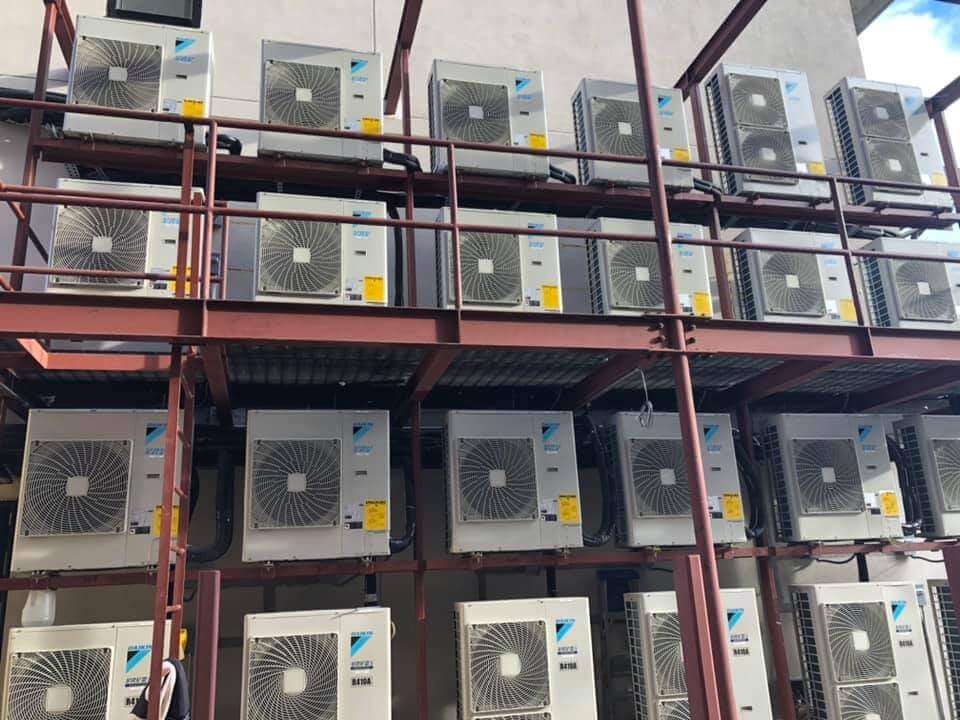
Large commercial facilities face unique HVAC challenges. Different areas of a building often have varying occupancy levels, operating hours, and comfort requirements. Without zoning, a single HVAC system is forced to treat every space the same—leading to wasted energy, comfort complaints, and higher operating costs. Commercial HVAC zoning solutions address these challenges by delivering precise control where it’s needed most.
What Is Commercial HVAC Zoning?
HVAC zoning divides a building into multiple areas, or zones, each controlled independently. Instead of heating or cooling the entire facility uniformly, zoning allows HVAC systems to respond to the specific needs of individual spaces.
Zones are typically controlled using dampers, variable-speed equipment, sensors, and centralized controls, all working together to regulate temperature and airflow efficiently.
Why Zoning Is Essential for Large Facilities
Large facilities rarely operate uniformly. Offices, conference rooms, data centers, retail floors, warehouses, and common areas all generate and retain heat differently. Zoning helps address these variations while reducing system strain.
Key benefits include:
- Improved occupant comfort
- Reduced energy waste
- Better system efficiency
- Lower peak demand
- Fewer tenant and staff complaints
A strategic zoning approach also supports long-term HVAC planning and scalability.
Common Zoning Challenges in Large Buildings
Many large facilities struggle with:
- Hot and cold spots across floors or departments
- Areas with drastically different schedules
- Sun-exposed zones overheating
- Underutilized spaces being conditioned unnecessarily
Zoning directly targets these issues by allowing systems to adapt in real time.
Zoning Solutions for Commercial HVAC Systems
Damper-Based Zoning Systems
Motorized dampers installed within ductwork regulate airflow to different zones. When a zone reaches its setpoint, dampers adjust to redirect airflow elsewhere.
Damper-based zoning is often effective when paired with professional air conditioning service and proper system balancing to avoid pressure issues.
Variable Air Volume (VAV) Systems
VAV systems are widely used in large commercial buildings. They adjust airflow volume to each zone based on demand, delivering precise temperature control while reducing energy consumption.
These systems are especially effective in office buildings, healthcare facilities, and educational campuses with variable occupancy patterns.
Smart Controls and Building Automation
Modern zoning relies heavily on advanced controls. Building automation systems monitor temperature, occupancy, and schedules to optimize zone performance automatically.
Smart controls:
- Prevent simultaneous heating and cooling
- Adjust output based on real-time demand
- Reduce after-hours energy use
- Provide data for ongoing optimization
A coordinated approach through a comprehensive services overview ensures controls and zoning strategies work together seamlessly.
Zoning With Heat Pump and Hybrid Systems
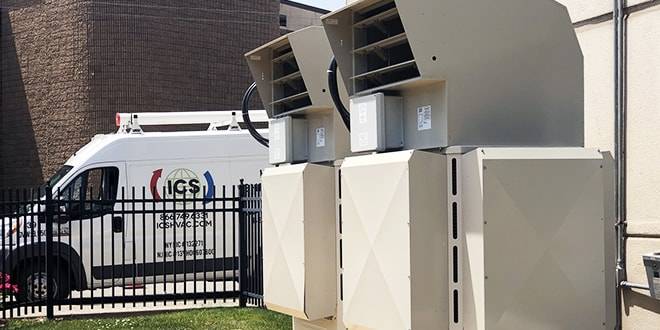
In many large facilities, zoning pairs well with modern heat pump solutions. Heat pumps provide variable output and zoned comfort while supporting energy efficiency and electrification goals.
Hybrid systems can also use zoning to switch between heating and cooling sources efficiently based on zone demand and outdoor conditions.
Energy Efficiency and Cost Savings From Zoning
Zoning significantly reduces wasted energy by conditioning only occupied or high-demand areas. This leads to:
- Lower utility bills
- Reduced peak demand charges
- Less runtime on major components
- Extended equipment lifespan
Facilities with zoning often see faster ROI compared to system-wide equipment replacements.
Zoning Supports Better Maintenance and System Longevity
Zoned systems experience less wear because equipment doesn’t have to run at full capacity constantly. Reduced cycling and balanced airflow protect critical components.
Pairing zoning upgrades with professional heating services and routine maintenance ensures reliable performance across all seasons.
When Zoning Makes the Most Sense
Commercial HVAC zoning is especially valuable for:
- Large office buildings
- Hospitals and healthcare facilities
- Retail centers and malls
- Warehouses with mixed-use areas
- Schools and universities
- Multi-tenant properties
If your facility experiences uneven comfort, high energy costs, or constant thermostat complaints, zoning should be a top consideration.
Planning a Zoning Upgrade
Successful zoning starts with understanding how your building is actually used. Load calculations, airflow analysis, and occupancy evaluation help determine the right zoning strategy.
Professional assessment ensures zoning improves comfort without creating airflow or control conflicts.

Work With a Commercial HVAC Partner Who Understands Zoning
Commercial HVAC zoning requires precise design, expert installation, and ongoing optimization. Working with Integrate Comfort Systems helps large facilities across New York City and New Jersey implement zoning solutions that improve comfort, efficiency, and operational control. If you’re exploring zoning options for a large facility, contact us to schedule a consultation.