

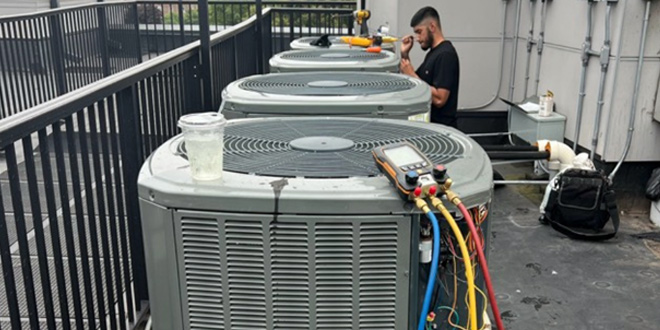
When commercial air conditioning fails, it can disrupt operations immediately—especially during high heat, high humidity, or peak occupancy periods. Whether you manage an office, retail space, medical facility, or mixed-use building, knowing what to do during an AC emergency can reduce downtime, protect occupants, and prevent minor problems from turning into major equipment damage.
What Counts as a Commercial AC Emergency?
Not every AC issue requires emergency service, but these situations typically do:
- Total loss of cooling in occupied spaces
- Rapidly rising indoor temperatures during extreme heat
- Server rooms, refrigeration, or equipment areas overheating
- Electrical burning smells, smoke, or repeated breaker trips
- Water leaks causing damage or safety risks
- Unusual noises indicating potential mechanical failure
If safety, business continuity, or property damage is at risk, treat it as an emergency.
First Steps: What to Check Before Calling for Emergency Repair
A quick, safe triage can help you identify obvious issues and speed up diagnosis.
Confirm Power and Controls
- Check breakers, disconnects, and emergency shutoffs (if accessible and safe)
- Confirm thermostat settings and schedules weren’t changed
- Review alarms on building automation systems (if applicable)
Note Symptoms and Affected Areas
Document:
- Whether the problem is building-wide or limited to specific zones
- Any unusual noises, odors, leaks, or cycling behavior
- Recent power events, renovations, or equipment changes
These details help technicians respond faster with the right tools and parts.
Common Causes of Emergency Commercial AC Failures
Many emergency failures stem from problems that worsened quietly over time. Common causes include:
- Failed capacitors, contactors, or relays
- Dirty coils causing high head pressure and shutdowns
- Refrigerant leaks leading to weak cooling and compressor strain
- Fan motor failure or belt issues reducing airflow
- Economizer or damper failures affecting ventilation and cooling performance
- Drain clogs and condensate overflow causing water damage
Coordinating ongoing service through a structured services overview reduces the likelihood of these failures during peak season.

What to Expect During an Emergency Commercial AC Service Call
A professional emergency repair typically includes:
- Rapid diagnostics to identify root cause
- Safety checks (electrical, pressure, and control integrity)
- Temporary stabilization measures if needed
- Repair or replacement of failed parts where feasible
- Recommendations for corrective actions to prevent repeat failures
If equipment is unsafe or at high risk of damage, technicians may recommend shutting a unit down until repairs can be completed.
How to Stabilize Operations During a Breakdown
While technicians are en route, you can reduce risk and improve comfort by:
- Reducing occupancy in affected areas
- Using temporary cooling in critical spaces
- Lowering internal heat loads (lights, equipment, nonessential processes)
- Closing blinds on sun-facing areas to reduce heat gain
- Raising setpoints slightly in non-critical zones to reduce system strain
If your business relies on temperature-sensitive equipment, prioritize those areas first.
When Emergency Repair Turns Into Replacement Planning
If your system is older, repeatedly failing, or unable to meet load demands, emergency repair may be a short-term fix. Warning signs that replacement should be evaluated include:
- Multiple service calls per season
- Rising energy bills with declining cooling performance
- Major component failures (compressors, control boards)
- Obsolete parts or refrigerant constraints
- Chronic comfort complaints and hot spots
Exploring modern options—including high-efficiency systems and heat pump solutions—can reduce long-term costs and improve reliability.
The Role of Preventive Maintenance in Avoiding Emergencies
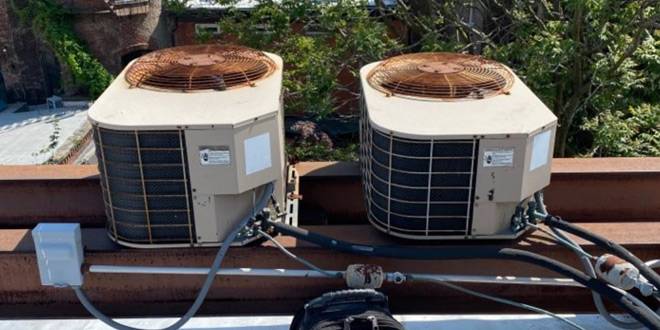
Most AC emergencies are preventable. Regular tune-ups catch coil fouling, failing electrical components, airflow restrictions, and control issues before they trigger shutdowns. If you manage year-round HVAC performance, pairing cooling readiness with professional heater maintenance supports smoother seasonal transitions and reduces strain on shared components like blowers and controls.
For businesses with recurring heating concerns, broader heating services planning can also improve overall HVAC reliability.
Choose a Commercial HVAC Partner You Can Rely On
Emergency response is only one part of the equation—what matters is accurate diagnosis, dependable repair, and a plan to prevent repeat failures. Working with Integrate Comfort Systems helps businesses across NYC and NJ respond quickly, restore comfort, and build a proactive maintenance strategy. If you need emergency commercial AC repair or want to reduce your risk before peak heat arrives, contact us right away.