

Winter weather in New York and New Jersey places intense operational demands on commercial HVAC systems. As temperatures drop, heating equipment runs longer, energy usage increases, and even minor issues can disrupt tenant comfort or business operations. A proactive winter HVAC maintenance checklist helps building owners and facility managers reduce risk, control costs, and maintain reliable performance throughout the cold season.
This guide outlines essential winter maintenance priorities for commercial buildings and when professional service becomes critical.
Why Winter HVAC Maintenance Is Critical for Commercial Buildings
Unlike residential systems, commercial HVAC equipment often operates continuously and serves multiple zones, tenants, or departments. Cold weather can amplify existing inefficiencies, leading to uneven heating, higher utility bills, and unexpected system failures during peak demand.
Winter maintenance helps commercial properties:
- Maintain consistent indoor comfort for occupants
- Reduce energy consumption and operating costs
- Protect expensive HVAC assets from premature wear
- Minimize emergency service calls and downtime
Pre-Winter Commercial HVAC Maintenance Priorities
Replace or Upgrade Air Filters
Dirty or undersized filters restrict airflow and reduce system efficiency, especially during extended heating cycles. Commercial buildings should review filter condition before winter begins and establish a regular replacement schedule.
Proper filtration supports:
- Balanced airflow across zones
- Improved indoor air quality
- Reduced strain on blowers and heat exchangers
Facilities with higher occupancy or specialized air quality needs may benefit from upgraded filtration solutions.
Test Thermostats and Building Controls
Before winter weather sets in, confirm that thermostats, sensors, and building automation systems are communicating correctly. Faulty controls can lead to overheating, cold zones, or unnecessary energy use.
Key checks include:
- Verifying zone temperature accuracy
- Reviewing heating schedules and setbacks
- Confirming proper system response to demand
Control calibration is often addressed during professional commercial heating services and seasonal system inspections.
Inspect Vents, Ductwork, and Air Distribution
Uneven heating in commercial spaces is often linked to airflow issues rather than heating capacity. Supply diffusers, return grilles, and ductwork should be inspected to ensure airflow is not obstructed or leaking.
Common winter-related issues include blocked diffusers, disconnected ducts, and pressure imbalances that become more noticeable as heating loads increase.
System-Specific Winter Maintenance Considerations
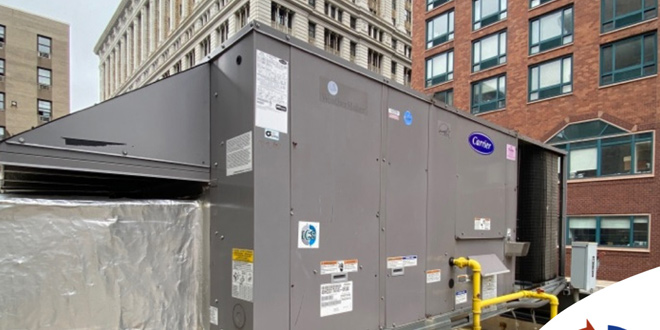
Boilers, Furnaces, and Rooftop Units
Commercial heating equipment should be inspected for signs of wear before peak winter operation. Unusual noises, short cycling, or delayed startup can indicate developing problems that worsen under cold conditions.
Professional inspections typically focus on:
- Heat exchangers and burners
- Safety controls and ignition systems
- Combustion efficiency and venting
Integrate Comfort Systems provides comprehensive heating services for commercial boilers, furnaces, and rooftop units throughout New York and New Jersey.
Heat Pumps and Hybrid Systems
Many commercial buildings now rely on heat pumps or hybrid systems for improved efficiency. During winter, outdoor units must remain clear of snow, ice, and debris to operate effectively.
If heating performance drops during colder temperatures, system adjustments or supplemental heating strategies may be required. ICS offers advanced heat pump solutions designed specifically for Northeast winter conditions.
Don’t Overlook Safety and Compliance
Winter is the most demanding season for combustion-based systems. Carbon monoxide monitoring, proper ventilation, and safety control testing are essential to protect occupants and maintain code compliance. Regular professional maintenance helps identify safety risks before they become emergencies.
When to Schedule Professional Commercial HVAC Maintenance
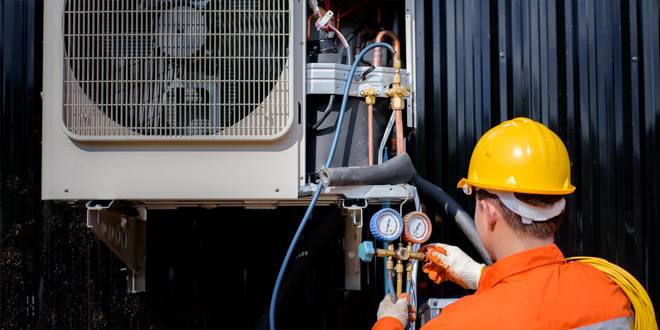
While basic facility checks are important, commercial HVAC systems require expert service to operate reliably in winter. Seasonal maintenance allows technicians to identify inefficiencies, correct airflow issues, and ensure systems are prepared for sustained cold weather.
Facility managers can explore full system support options through the Integrate Comfort Systems services overview or learn more about the company’s experience serving complex commercial properties on the ICS homepage.
Prepare Your Building for Winter Weather
A well-maintained HVAC system is critical to business continuity during winter. By following a structured maintenance checklist and partnering with an experienced commercial HVAC provider, building owners can protect comfort, control energy costs, and reduce operational risk.
To schedule winter HVAC maintenance or request a system evaluation, contact Integrate Comfort Systems through the contact page and work with a trusted commercial HVAC team serving New York and New Jersey.